Launch offer — valid today only

📄 Digital book in PDF · read it on your phone or print it

Locksmithing in Drawings: Cylinders, Master Keys and Door Hardware You Can Read at a Glance One Topic on Every Page

Pin tumbler cylinders, bitting and MACS, rekeying, master keying, door handing, panic hardware, fail-safe vs. fail-secure and state licensing. Every topic gets its own page: the drawing first, then what you need to remember. 65 illustrated pages.

START STUDYING THIS WAY

🔒 Secure checkout · PDF by email · 30-day guarantee

Every topic, its own pageEach part and each rule drawn, with the explanation right beside it
65 illustrated pages8 parts, from the pin tumbler cylinder to the day before the exam
Up-to-date sourcesANSI/BHMA A156, NFPA 80 and 101, the IBC and state licensing laws
PDF by emailFormat

Look Inside the Book

Every page has one big drawing and a box with the numbers, rules or steps you need to know:

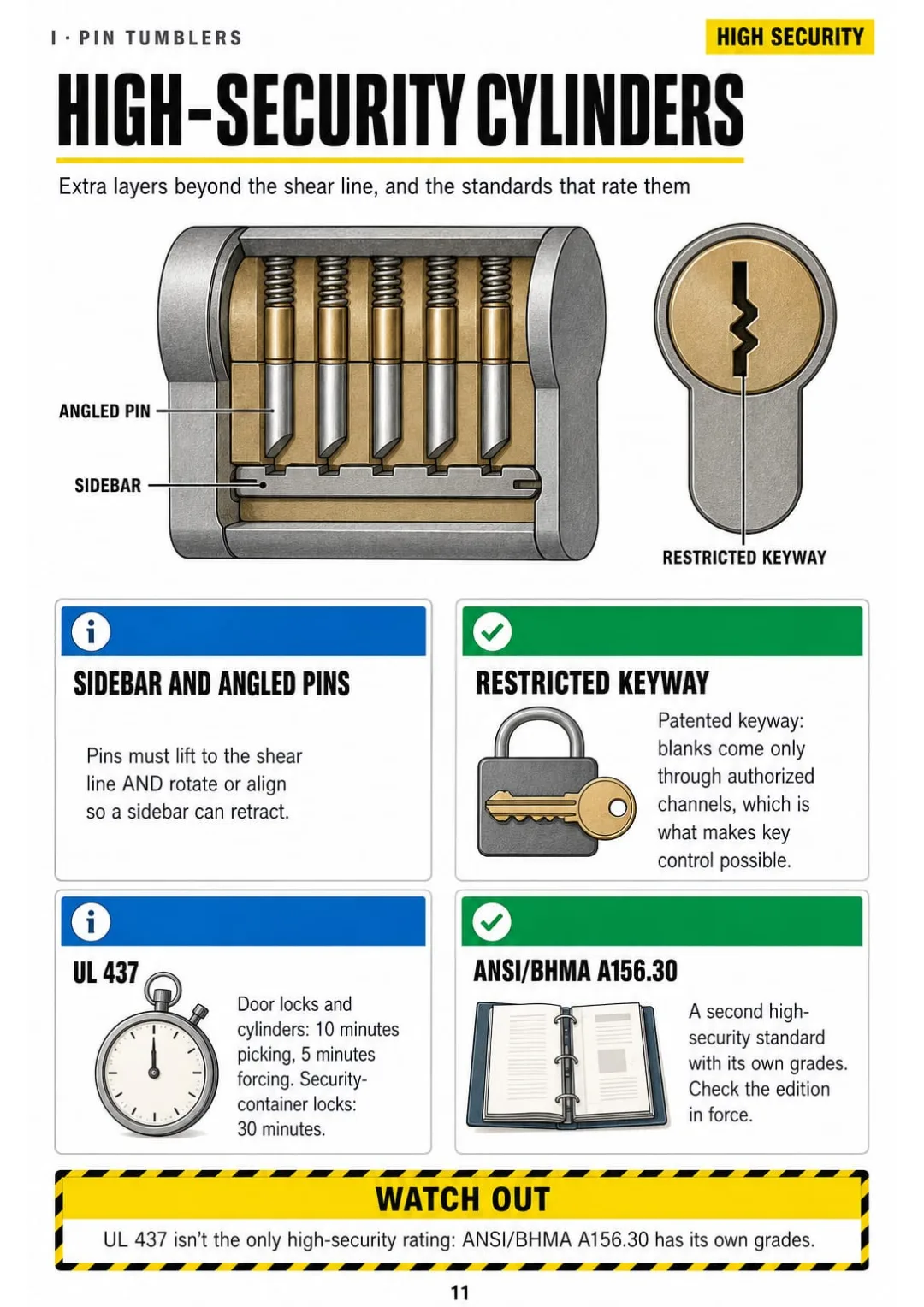
What makes a cylinder high-security, and how UL 437 rates it: 10 min picking, 5 min forcing.
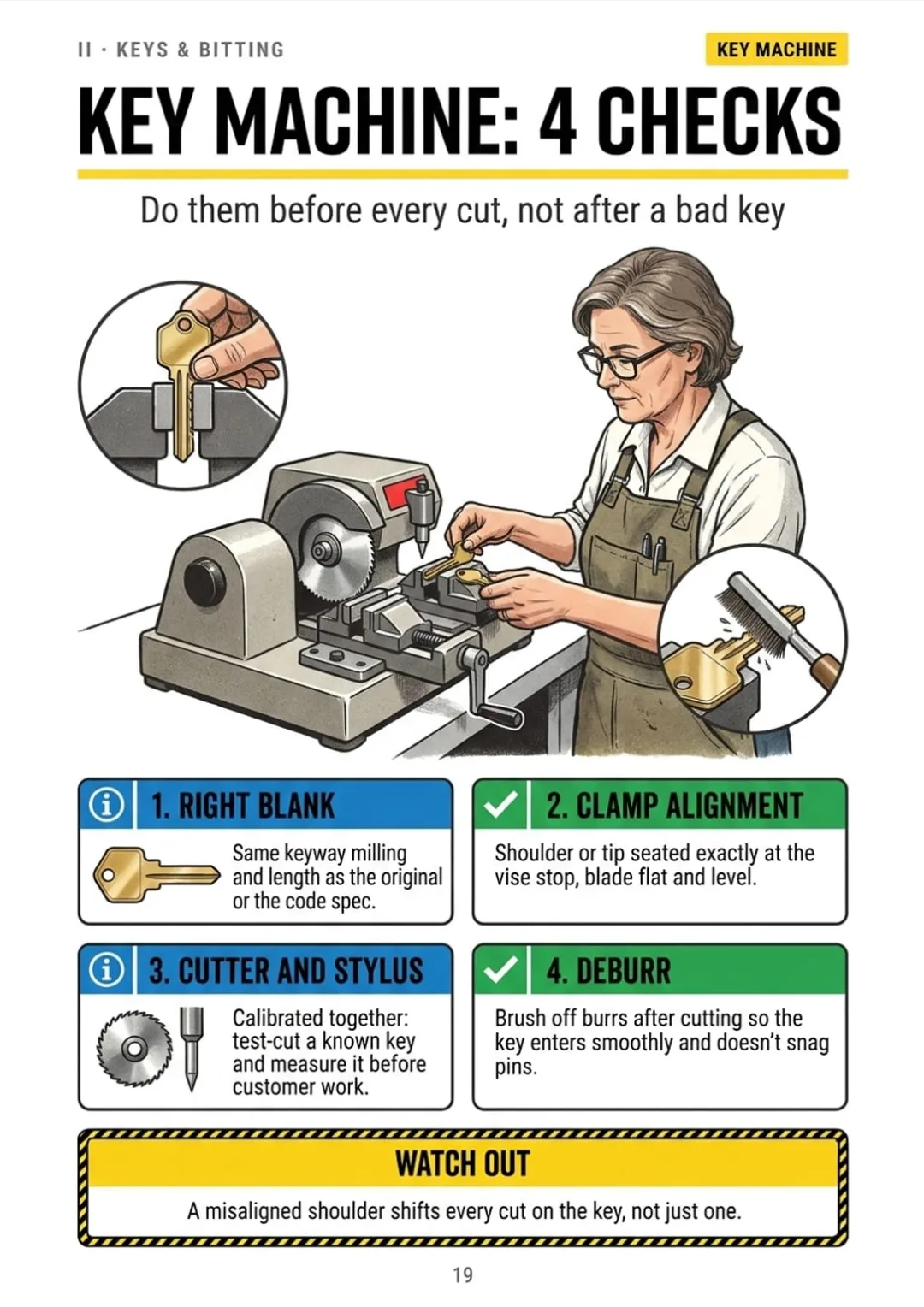
Blank, clamp, calibration, deburr: four checks before cutting
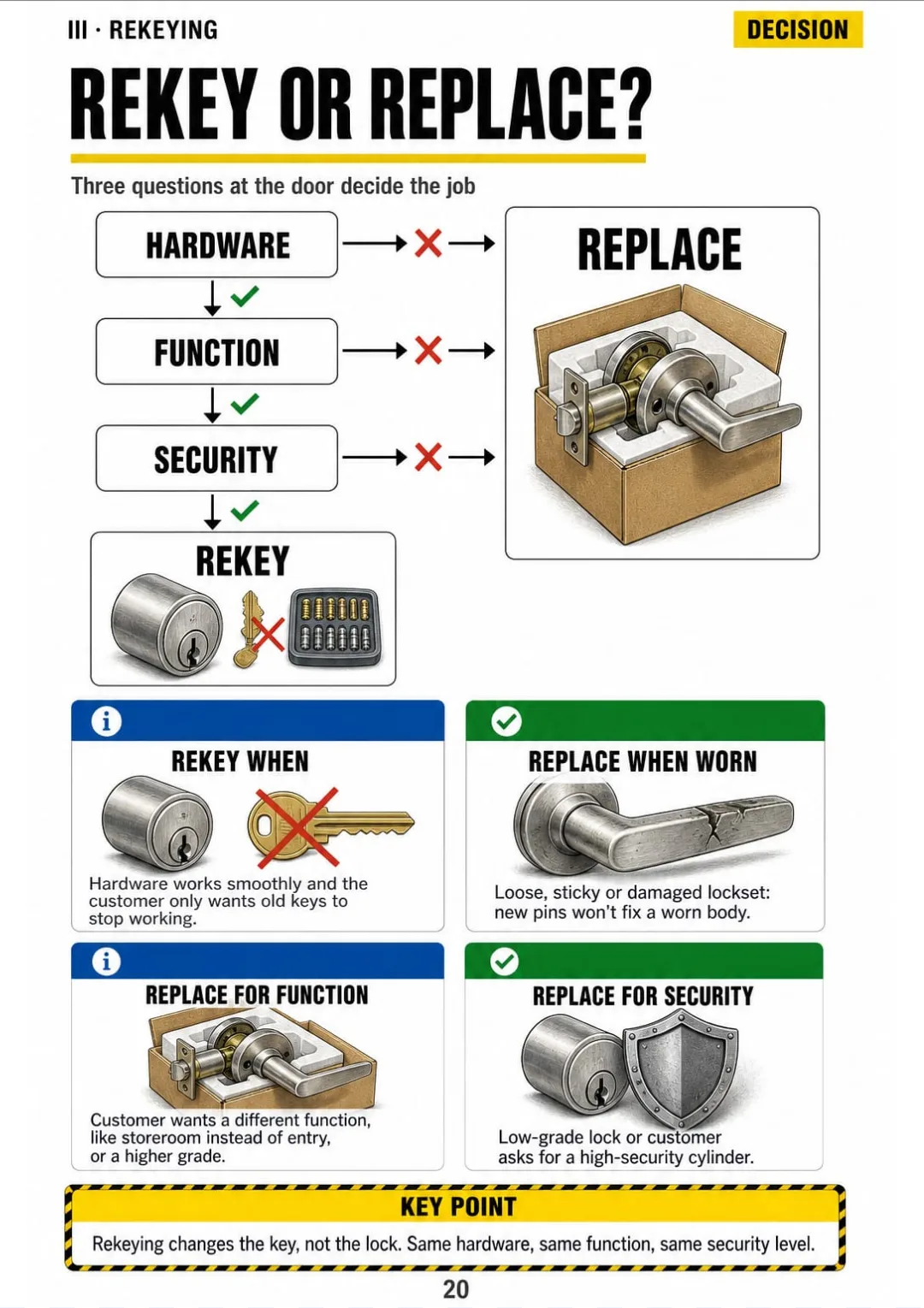
Rekey or replace: a 3-question decision tree you can run at the door
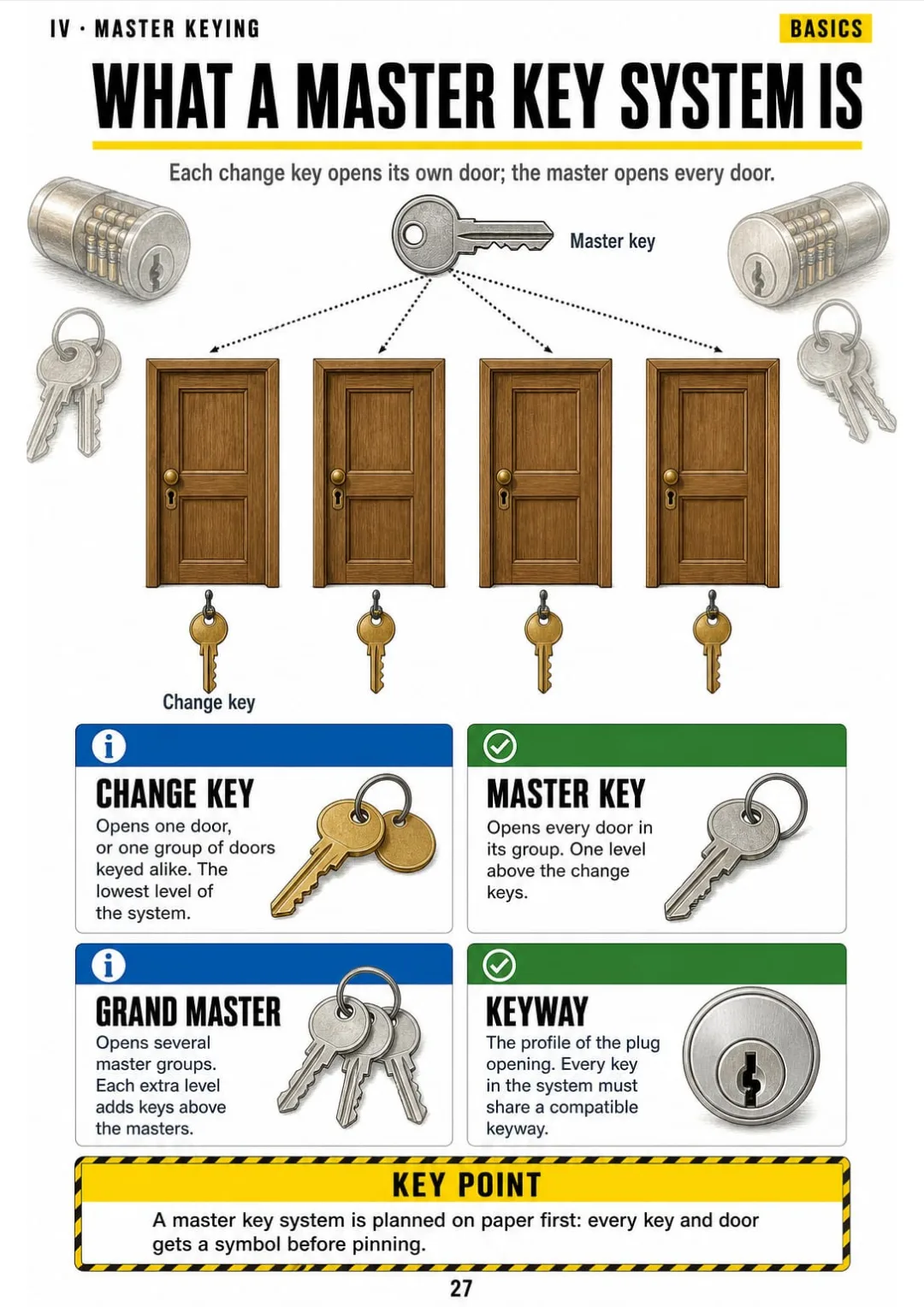
Change key, master, grand master and keyway, drawn on one small building.
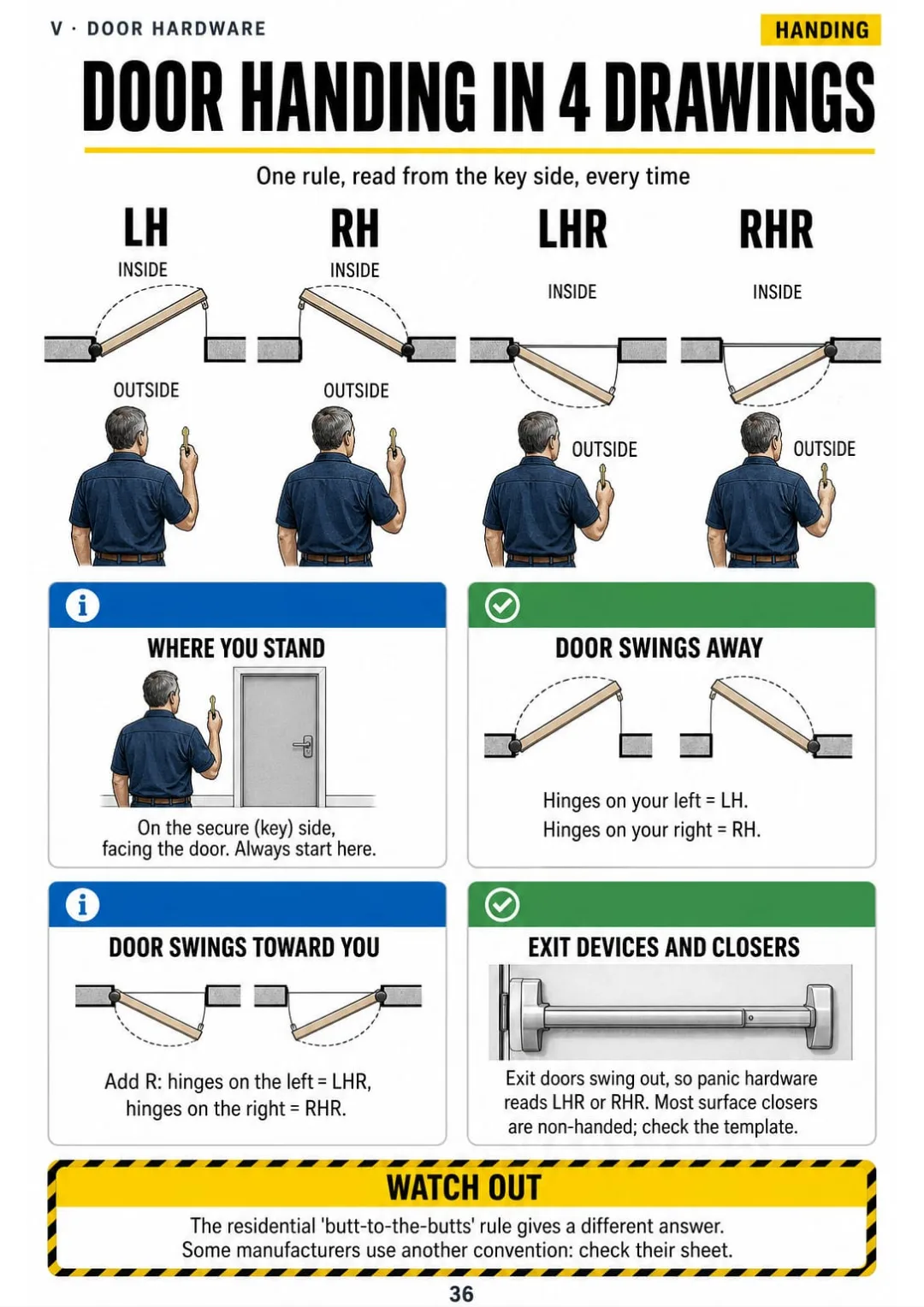
LH, RH, LHR, RHR: four top-view drawings, one rule read from the key side.
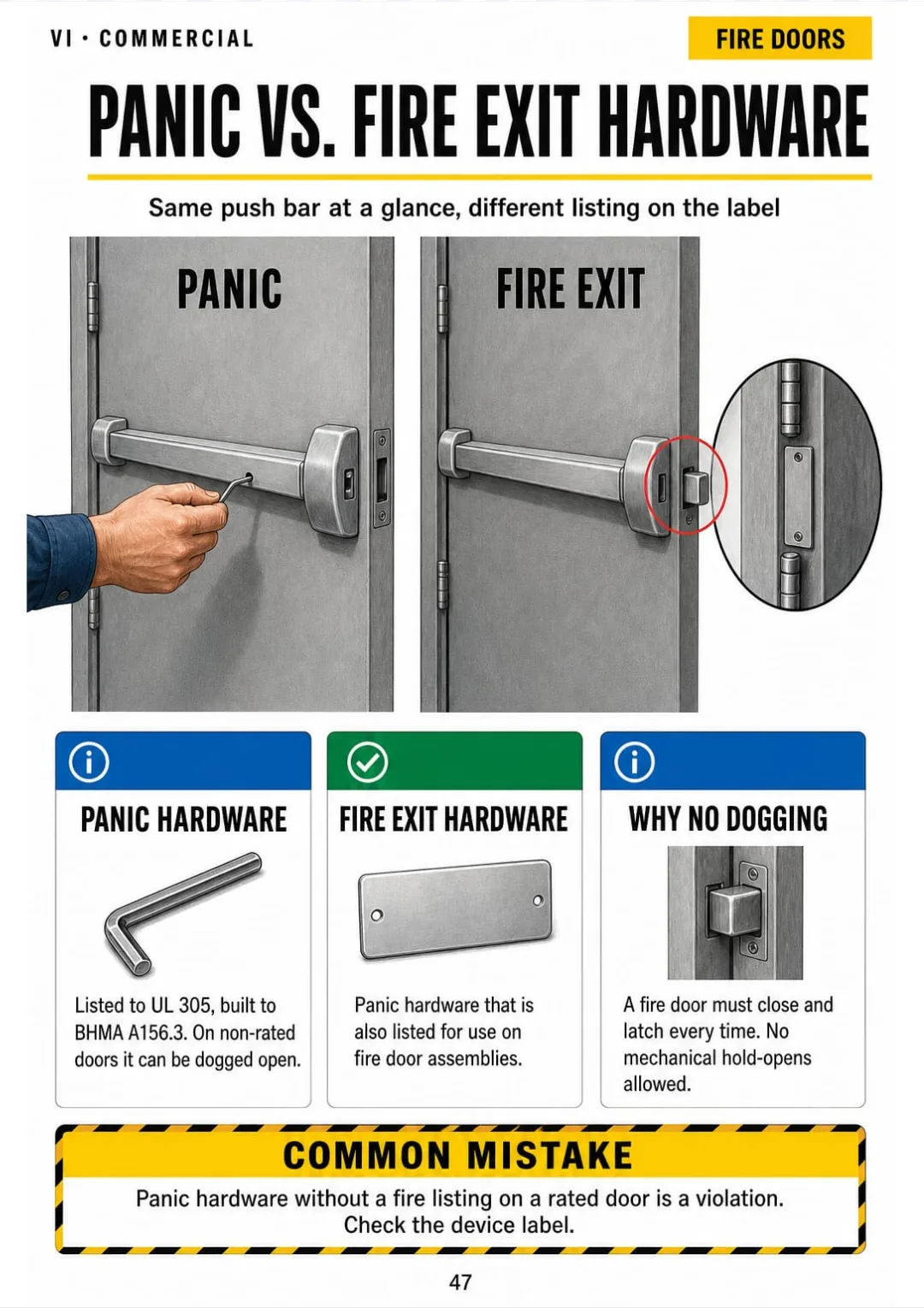
Panic hardware: ANSI/BHMA A156.3 · fire exit hardware: also listed for fire door assemblies, must latch
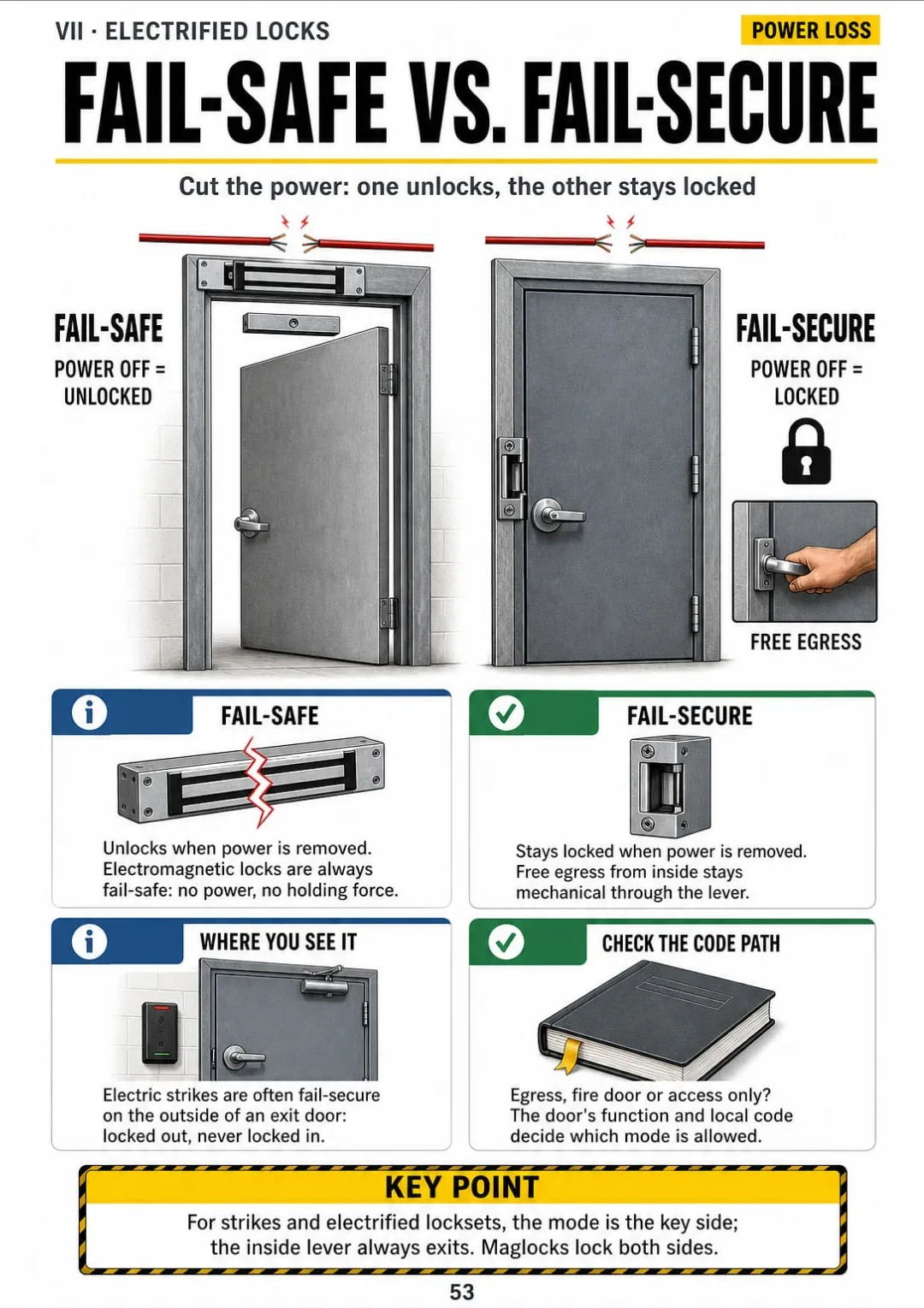
Fail-safe unlocks without power; fail-secure stays locked, and a maglock is always fail-safe.
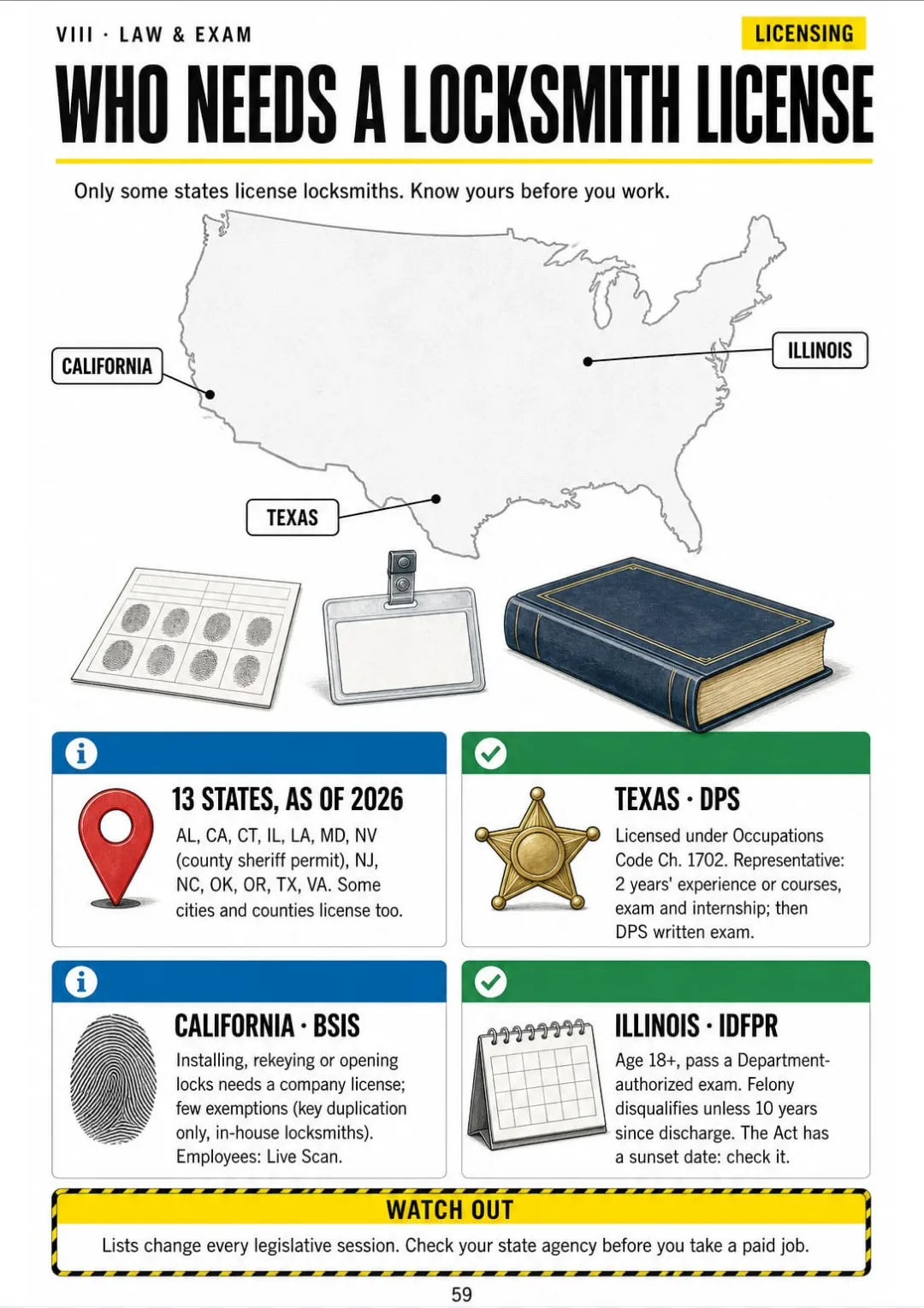
13 states license locksmiths as of 2024: AL, CA, CT, IL, LA, MD, NV, NJ, NC, OK, OR, TX, VA.

Swipe to see more →

These are real pages from the book. The table of contents is the full one: 8 parts and 61 topics.

The Problem Isn't You. It's How It Was Explained to You.

You're at a customer's front door. They just bought the house, they want new keys, and they ask you straight out: rekey it or put in a new lock?

You know the answer is "it depends." But the manual covers it in long paragraphs spread over two chapters, and none of them tells you what to check first.

Rekey or replace: a 3-question decision tree you can run at the door

In the book it's one page: a decision tree with 3 questions you run right there at the door, every branch drawn, each one ending in "rekey" or "replace."

Same with the shear line, MACS, door handing, master pins and panic hardware: each one has its own page.

You give the customer a clear answer, you can explain why, and you do the job without going back to the manual.

COMPARE FOR YOURSELF

The Same Topic, Two Ways to Study It

THIS
  • The manual: line after line after line
  • The parts of a key explained only in words
  • You walk into the exam with doubts
The key consists of several distinct regions, each of which serves a defined function in the operation of the lock. The bow constitutes the gripping portion and may bear stamped identification. Adjacent to the bow is the shoulder, or stop, which contacts the face of the cylinder and thereby establishes the reference point from which all cut spacing is measured. The blade, extending from the shoulder to the tip, carries both the milling corresponding to the keyway and the cuts whose depths are determined by manufacturer specification.
FOR THIS
  • The key in one drawing, every part labeled
  • The spacing rule in one box
  • You see it and you get it
Blank, clamp, calibration, deburr: four checks before cutting
CONTENTS

Take a Look at the 8 Parts and 61 Topics

How a pin tumbler works, keys and bitting, rekeying, master keying, doors and hardware, exit devices and fire doors, electrified locks and safes, and law and exam review: 65 pages, all illustrated.

IHow a Pin Tumbler Lock Works · pp. 5-11
  1. The Pin Tumbler Cylinder, Opened Up
  2. The Shear Line: Why the Right Key Turns
  3. Plug, Shell and Retainer: What Holds It Together
  4. Pin Chambers: Counting and Numbering
  5. Wafer, Disc and Tubular Locks
  6. Security Pins: Spools, Serrated, Mushroom
  7. High-Security Cylinders: What Makes Them Different
IIKeys, Blanks and Bitting · pp. 12-19
  1. Anatomy of a Key
  2. Identifying Key Blanks
  3. Bitting: Depth and Spacing
  4. Two Common Specs: Schlage vs. Kwikset
  5. MACS: Maximum Adjacent Cut Specification
  6. Duplicating vs. Code Cutting
  7. Decoding a Key and a Lock
  8. Key Machines: Calibration and Checks
IIIRekeying, Step by Step · pp. 20-26
  1. Rekey or Replace? The Decision
  2. The Rekeying Kit
  3. Rekeying a Knob or Lever Cylinder in 7 Steps
  4. Choosing Bottom Pins for the New Key
  5. Rekeying a Deadbolt
  6. Keying Alike: Several Locks, One Key
  7. When the Plug Won't Go Back: Troubleshooting
IVMaster Keying with Worked Examples · pp. 27-35
  1. What a Master Key System Is
  2. Master Pins: Two Shear Lines in One Chamber
  3. Worked Example: 1 Master, 2 Change Keys
  4. Key Symbols: GGM, GM, AA, AA1
  5. Total Position Progression
  6. Rotating Constant Method
  7. Two-Step Progression and Key Interchange
  8. The Bitting List and Key Chart
  9. Security Trade-offs of Master Keying
VDoors, Locks and Hardware · pp. 36-44
  1. Door Handing in 4 Drawings
  2. Parts of a Door Opening
  3. Backset and Door Prep
  4. Installing a Deadbolt in 8 Steps
  5. Lock Types: Bored, Tubular, Mortise, Rim
  6. Lock Functions: Passage, Privacy, Entry, Storeroom, Classroom
  7. ANSI/BHMA Grades 1, 2, 3
  8. Strikes, Hinges and Door Closers
  9. Accessibility: Lever Heights and Force
VICommercial: Exit Devices and Fire Doors · pp. 45-52
  1. Panic Hardware: When It's Required
  2. Exit Device Types
  3. Panic vs. Fire Exit Hardware
  4. Fire-Rated Doors Under NFPA 80
  5. Egress Rules: One Motion, No Key
  6. Stairwell Re-entry
  7. Interchangeable Core (IC) Cylinders
  8. Mortise and Rim Cylinders, Cams and Tailpieces
VIIElectrified Locks, Access Control and Safes · pp. 53-58
  1. Fail-Safe vs. Fail-Secure
  2. Electric Strikes and Magnetic Locks
  3. Anatomy of an Access Control Door
  4. Delayed Egress Locks
  5. Safe Basics: Ratings and Combination Locks
  6. Automotive Keys: Transponders and Fobs
VIIILaw, Ethics and Exam Review · pp. 59-65
  1. State Licensing: Who Needs a License
  2. Professional Certifications
  3. Verifying Before a Lockout
  4. Key Control and Records
  5. Opening Methods and Ethics
  6. The 10 Numbers to Know Before the Exam
  7. Final Checklist: The Day Before the Exam

One Page, One Topic, All Clear

Think of it this way:

A property manager wants one key for herself and separate keys for each suite. You need a master key system, and you need it right the first time.

You open the page and it's drawn on one small building: change key, master, grand master and keyway, every door labeled, then a worked example with one master and two change keys.

LH, RH, LHR, RHR: four top-view drawings, one rule read from the key side.

Same with door handing, the shear line, bitting depth and spacing, panic hardware and fail-safe vs. fail-secure: each one on its own page.

Locksmith Illustrated is 8 parts and 61 topics, all drawn, and it ends with the 10 numbers to know and a checklist for the day before the exam.

What you see drawn, you don't have to memorize.

What's Inside Locksmith Illustrated:

Ipp. 5-11

How a Pin Tumbler Lock Works

The cylinder opened up, the shear line, plug, shell and retainer, pin chambers, wafer and disc locks, security pins and high-security cylinders.

IIpp. 12-19

Keys, Blanks and Bitting

Read any key before you cut it: parts of a key, identifying blanks, depth and spacing, Schlage vs. Kwikset specs, MACS, code cutting, decoding and key machine calibration.

IIIpp. 20-26

Rekeying, Step by Step

Rekey or replace, the kit, a knob cylinder in 7 steps, choosing bottom pins, deadbolts, keying alike and what to do when the plug won't go back.

IVpp. 27-35

Master Keying with Worked Examples

Plan a master key system that works the first time: master pins and two shear lines, a worked example with 1 master and 2 change keys, key symbols, progressions, the bitting list and the security trade-offs.

Vpp. 36-44

Doors, Locks and Hardware

Door handing in 4 drawings, parts of the opening, backset, a deadbolt in 8 steps, lock types and functions, ANSI/BHMA grades, closers and accessibility.

VIpp. 45-52

Commercial: Exit Devices and Fire Doors

When panic hardware is required, exit device types, panic vs. fire exit hardware, fire doors under NFPA 80, egress rules, stairwell re-entry and IC cores.

VIIpp. 53-58

Electrified Locks, Access Control and Safes

Fail-safe vs. fail-secure, electric strikes and maglocks, the access control door, delayed egress, safe basics and automotive transponders.

VIIIpp. 59-65

Law, Ethics and Exam Review

Who needs a license, certifications, verifying before a lockout, key control, opening ethics, the 10 numbers to know and the day-before checklist.

At the end of the book: The 10 numbers to know before the exam and a day-before checklist.
Plus: 2 Free Books

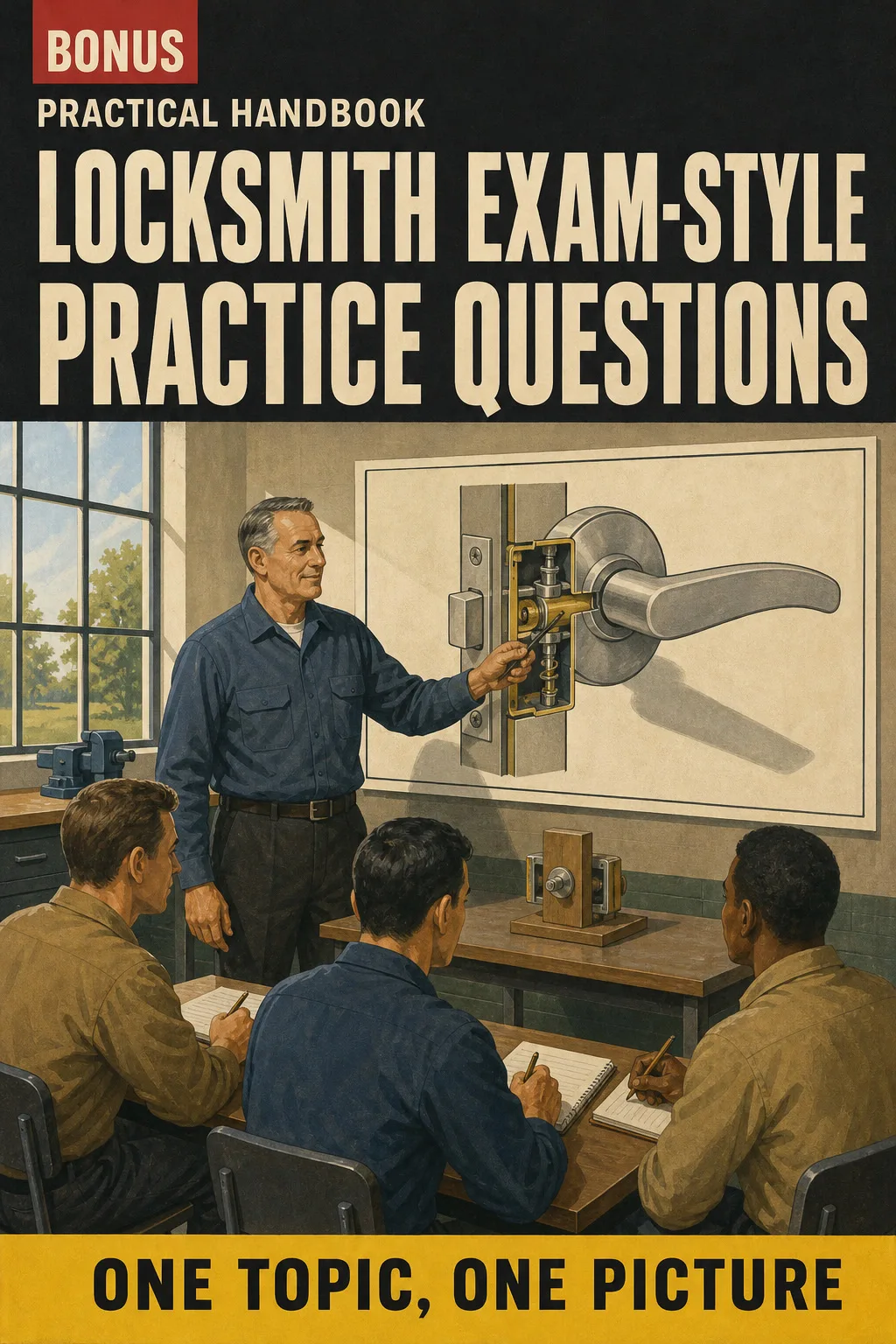
Locksmith Exam-Style Practice Questions

BONUS 1: «Locksmith Exam-Style Practice Questions»

Value on its own: US$ 17.90

Test yourself on cylinders, bitting, master keying, door hardware and legal rules, with every answer explained so you know why it's right.

The 15 Most Common Locksmith Mistakes

BONUS 2: «The 15 Most Common Locksmith Mistakes»

Value on its own: US$ 14.90

See each mistake next to the right way, drawn side by side, so you catch it before the exam or before it costs you a callback.

Locksmith Illustrated with 2 Free Books

  • Locksmith Illustrated: 65 illustrated pagesUS$ 63
  • BONUS 1: Locksmith Exam-Style Practice QuestionsUS$ 17.90
  • BONUS 2: The 15 Most Common Locksmith MistakesUS$ 14.90
  • High-resolution PDF to printIncluded
Total value US$ 95.80
YOUR PRICE:
US$ 27
You save US$ 68.80
YES, I WANT LOCKSMITH ILLUSTRATED FOR US$ 27

📄 This is a digital PDF book sent to your email: nothing is printed or shipped.

Secure purchaseEncrypted payment30-day guarantee

PDF by email: We email you Locksmith Illustrated as a PDF, together with the two free books. It's a single payment: no installments, no extra charges.

Who This Book Is For

You're learning the trade

You're learning the trade

Every part of the lock is drawn before you have to remember its name, so the terms finally connect to something you can see.

Your license exam is coming up

Your license exam is coming up

One page per topic and the 10 numbers in one place, so your review follows the same order every time, with practice questions to check yourself.

You already work on locks

You already work on locks

Master keying, handing and exit device rules on pages you can print and keep in the truck, for the jobs you don't do every week.

Everything You Get Today

US$ 95.80US$ 27
YES, I WANT LOCKSMITH ILLUSTRATED FOR US$ 27

📄 This is a digital PDF book sent to your email: nothing is printed or shipped.

30DAYS
GUARANTEE

30-Day Guarantee

Try Locksmith Illustrated for 30 days, bonus books included.

We refund everything if the file won't open, if the book isn't what you see here, if you were charged twice or if the email doesn't arrive. Just email us.

You pay once. No subscriptions.

Frequently Asked Questions

Is it for me if I've been working on locks for years?

Yes. It's not a beginner's book: it puts what you already do on one drawn page per topic, and adds the parts you see less often, like master keying, exit devices and licensing rules.

Does it work for my state?

It's built on the codes used across the US: ANSI/BHMA A156, NFPA 80 and 101, the International Building Code and the 2010 ADA Standards. Licensing rules change from state to state, and not every state has an exam, so the licensing pages show you what to check with yours. Every code number is flagged so you can compare it with the edition your AHJ uses.

Is it official, and does it fit my state's exam?

No. It's an independent study book, not affiliated with any state agency, certifying organization or standards body, and it doesn't give you a license or a certificate. It covers the topics locksmith license exams and certifications are built on: cylinders, keys and bitting, rekeying, master keying, door hardware, exit devices, codes and law. It's not one state's question bank: the licensing pages show what to check with your state's agency before the exam.

Does it replace a training course?

No. It's a study and review book. It doesn't replace any training, apprenticeship or hours your state may require.

Are the practice questions the ones on the exam?

No. They're written for this book, in the style of a licensing exam, with every answer explained. They are not official exam questions.

When and how do I get it?

The book and the 2 bonus books arrive as PDFs by email, at the address you enter at checkout.

Do I have to pay every month?

No. It's a one-time payment. No subscription.

Can I have it on paper?

Yes. It's a PDF you can print at home or at a print shop, whole or just the pages you want in the truck.

How does the refund work?

You have 30 days. We refund everything if the file won't open, if the book isn't what you see on this page, if you were charged twice or if the email doesn't arrive: just email us.

Before You Close This Page

No more rereading pages that don't stick.

Door handing, you see it drawn and you're done.

You walk into the exam knowing where everything is.

Drawings make studying faster.

The book is right below.

One-time payment: US$ 27 · Guarantee: 30 days · PDF by email

YES, I WANT LOCKSMITH ILLUSTRATED FOR US$ 27

📄 This is a digital PDF book sent to your email: nothing is printed or shipped.